
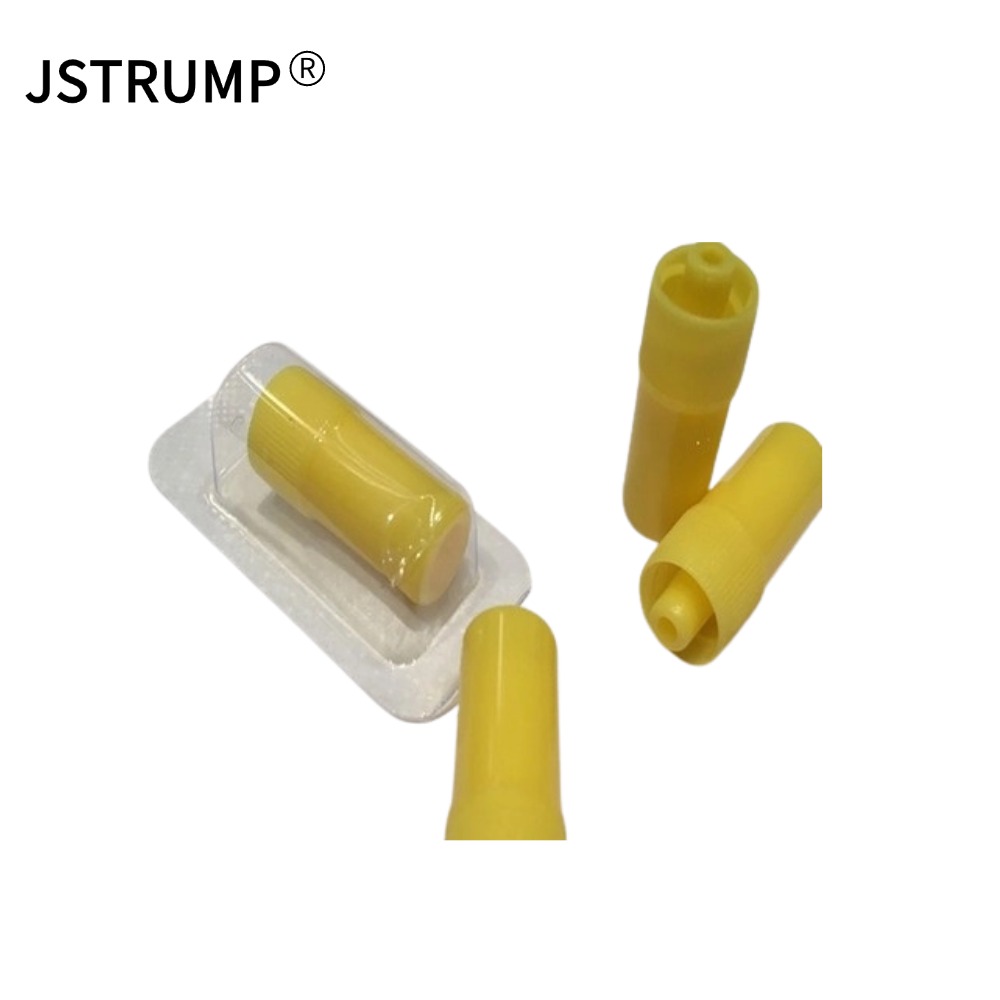
Choosing the right IV access device supplier is a critical decision for hospitals, clinics, distributors,
laboratories, and medical procurement teams. IV access devices are essential components in modern healthcare, supporting
infusion therapy, medication delivery, blood collection, fluid administration, and emergency care. Because these products
directly affect patient safety, clinical efficiency, and supply continuity, buyers must evaluate suppliers carefully before
placing bulk orders or building long-term sourcing relationships.
This complete buying guide explains how to select a qualified and stable supplier of IV access devices,
what product and quality criteria matter most, which certifications and manufacturing capabilities should be checked, and
how to compare suppliers using practical procurement standards. The following content is designed for SEO, hospital supply
directories, B2B product pages, and healthcare industry blogs. It includes definitions, advantages, buying factors,
procurement checklists, product specifications, and comparison tables—all based on industry-general information only.
IV access devices are medical products used to gain access to a patient’s venous system for the delivery of
fluids, medications, nutrients, and blood products, or for blood sampling and pressure monitoring. These devices are widely
used in emergency rooms, operating rooms, intensive care units, outpatient departments, dialysis settings, and home care
environments.
The term IV access device can refer to a broad range of products, including peripheral IV catheters,
extension sets, needle-free connectors, injection caps, central venous catheters, IV cannulas, safety catheters, introducers,
and related infusion accessories. In procurement, the buyer must identify not only the product category, but also the exact
clinical application, performance level, sterile packaging requirements, and regulatory status.
| Common IV Access Device Type | Main Use | Typical Buyers |
|---|---|---|
| Peripheral IV Catheter | Short-term venous access for fluids and medication | Hospitals, emergency departments, clinics |
| IV Cannula | Peripheral vascular access and infusion therapy | Hospitals, ambulatory care centers |
| Extension Set | Lengthens infusion line and improves handling | Hospitals, surgical centers |
| Needle-Free Connector | Safe access to IV lines without needles | Hospitals, infusion therapy units |
| Central Venous Catheter | Long-term or high-volume venous access | Hospitals, ICU, specialty care providers |
| IV Accessories | Support infusion workflow and line management | Medical distributors, procurement teams |
In the medical device industry, supplier qualification is not only about price. It is about consistent quality,
compliance, delivery reliability, manufacturing control, and patient safety. A supplier of IV access devices must
demonstrate the ability to manufacture products that are sterile, dimensionally accurate, clinically reliable, and compliant
with applicable regulations.
A poor supplier can create a wide range of problems, such as delayed shipments, inconsistent batch quality, packaging damage,
non-compliance with regulatory requirements, and increased clinical risk. In contrast, a qualified and stable supplier helps
buyers secure long-term supply, predictable pricing, lower defect rates, and better inventory planning.
A truly qualified IV access device supplier should meet several essential criteria. Buyers should evaluate each
potential partner using objective indicators rather than relying on price alone. The strongest suppliers combine technical
expertise, manufacturing discipline, regulatory compliance, and stable business performance.
A qualified supplier should operate under a well-documented quality management system (QMS). This system
covers raw material control, process validation, inspection, traceability, nonconformance handling, and corrective actions.
For medical device buyers, an organized QMS is one of the best indicators of long-term stability.
IV access devices must perform consistently across production batches. The supplier should be able to demonstrate control over
key parameters such as flow performance, catheter flexibility, connector fit, packaging integrity, and sterilization
validation.
Buyers should confirm that the supplier can provide technical documents, certificates, test reports, product specifications,
and compliance records as required by the target market. A qualified supplier understands export and local regulatory
requirements and can support product registration or import procedures.
Stable supply depends on the supplier’s ability to maintain consistent output. Production capacity, equipment utilization,
workforce stability, and warehouse management all affect delivery timelines and order fulfillment.
A good supplier should provide responsive communication, technical support, order tracking, complaint handling, and
replacement coordination when needed. This is especially important for distributors and institutional buyers that operate on
tight schedules.
Understanding the product category is the first step to choosing the correct supplier. Different IV access devices have
different design features, material requirements, and clinical applications. The table below summarizes common product types.
| Product Type | Material or Design Features | Typical Performance Needs |
|---|---|---|
| Peripheral IV Catheter | Medical-grade polymer, sharp bevel needle, flexible catheter tube | Easy insertion, secure placement, low irritation |
| IV Cannula | Transparent hub, color-coded gauge, sterile packaging | Stable venous access, visible flashback, comfortable use |
| Needle-Free Connector | Single-use or reusable, luer-compatible connection | Needleless access, leak resistance, easy disinfection |
| Extension Tube | Flexible tubing, secure connectors, anti-kink structure | Flow stability, length customization, user convenience |
| Injection Cap | Compatible with IV line systems, contamination control features | Reliable sealing, repeated access support |
| Central Venous Access Device | Advanced catheter materials and insertion accessories | Long-term access, high flow support, clinical durability |
The supplier selection process should be systematic. The following criteria can help buyers compare options and reduce
sourcing risk.
The first question should always be: does the supplier meet the regulatory requirements of your target market? Depending on
the destination country or region, this may include CE-related documentation, FDA-related compliance support, ISO quality
certification, product registration assistance, and sterilization validation data. Buyers should confirm that the supplier
has experience exporting to their market and understands documentation expectations.
Manufacturing capability affects product consistency, lead times, and scale-up potential. Buyers should investigate whether
the supplier has in-house molding, assembly, sterilization coordination, cleanroom production, and final inspection processes.
More integrated production often leads to better quality control and supply stability.
Specification sheets reveal essential product details, including dimensions, gauge sizes, materials, sterility status,
packaging methods, shelf life, compatibility, and intended use. A trustworthy supplier will provide clear and complete
specifications for every item.
Samples allow buyers to check physical quality, usability, packaging, labeling accuracy, and fit with existing systems. Batch
test data helps verify whether the product meets design specifications and whether quality remains stable across lots.
Stable suppliers manage raw materials, inventory, labor, and shipping effectively. Ask about average lead time, minimum order
quantity, production capacity, backlog management, and contingency plans for material shortages or seasonal demand spikes.
A reliable supplier should have procedures for deviation reporting, root cause analysis, corrective and preventive action
(CAPA), and customer complaint management. This is a strong sign of maturity and accountability.
When buying IV access devices, technical specifications are often more important than marketing claims. Buyers should compare
parameters that directly affect clinical use, compatibility, and safety.
| Specification Item | Why It Matters | What Buyers Should Confirm |
|---|---|---|
| Gauge Size | Determines flow rate and clinical application | Available gauge range and color coding |
| Material Composition | Affects flexibility, biocompatibility, and durability | Medical-grade material declaration |
| Sterility Status | Essential for infection control | Sterile or non-sterile packaging specification |
| Packaging Type | Affects shelf life and handling | Individual pouch, blister pack, bulk pack |
| Luer Compatibility | Ensures fit with standard infusion systems | Standard connector compatibility |
| Shelf Life | Supports inventory planning and usage control | Expiration period and storage conditions |
| Flow Performance | Impacts infusion efficiency | Rated flow data and test method |
| Pull Strength / Connection Security | Reduces leakage and accidental disconnection | Mechanical test results |
The best suppliers of IV access devices invest heavily in quality control. For buyers, quality indicators are a direct
reflection of supplier reliability. A supplier that cannot explain its inspection methods, testing standards, or batch control
process may not be suitable for long-term cooperation.
Working with a stable supplier offers both operational and commercial benefits. Buyers in healthcare and distribution value
long-term consistency because it helps create a predictable procurement environment.
| Advantage | Business Impact |
|---|---|
| Consistent product quality | Fewer defects, fewer returns, and more reliable clinical use |
| Stable lead times | Improved inventory planning and lower stockout risk |
| Strong documentation support | Simpler import, registration, and audit processes |
| Better pricing predictability | Easier budgeting for hospitals and distributors |
| Lower total procurement risk | Reduced disruption from quality failures or supply interruptions |
| Improved customer support | Faster resolution of technical and delivery issues |
Buyers should be cautious if a supplier shows any of the following warning signs. These red flags often indicate weak quality
control, unstable production, or poor compliance discipline.
The following comparison table can be used as a practical procurement tool when selecting an IV access device supplier.
| Evaluation Category | Supplier A | Supplier B | Supplier C |
|---|---|---|---|
| Regulatory documentation | Available / Partial / Missing | Available / Partial / Missing | Available / Partial / Missing |
| Manufacturing capacity | High / Medium / Low | High / Medium / Low | High / Medium / Low |
| Quality control system | Strong / Moderate / Weak | Strong / Moderate / Weak | Strong / Moderate / Weak |
| Sample quality | Excellent / Good / Fair / Poor | Excellent / Good / Fair / Poor | Excellent / Good / Fair / Poor |
| Lead time stability | Stable / Variable / Unclear | Stable / Variable / Unclear | Stable / Variable / Unclear |
| Communication quality | Fast / Average / Slow | Fast / Average / Slow | Fast / Average / Slow |
| Long-term cooperation potential | High / Medium / Low | High / Medium / Low | High / Medium / Low |
Product samples are an essential step in supplier qualification. Before committing to a large order, buyers should check the
sample from both a technical and operational perspective.
Use the checklist below to confirm whether a supplier is prepared for professional medical procurement.
| Checklist Item | Should Be Confirmed |
|---|---|
| Product category | Exact model and intended use |
| Gauge or size range | Available dimensions and selection options |
| Material details | Medical-grade materials and component list |
| Sterilization method | Validated sterilization process and packaging protection |
| Compatibility | Luer or system compatibility confirmation |
| Quality certificates | Applicable certifications and reports |
| Batch traceability | Lot control and identification system |
| Lead time | Standard production and delivery schedule |
| MOQ | Minimum order quantity and flexibility |
| After-sales support | Complaint resolution and replacement policy |
Buyers source IV access devices for different reasons, and each scenario has specific procurement priorities.
Asking the right questions helps buyers quickly identify whether a supplier is truly qualified and stable.
Some buyers need standardized products, while others require customization. In the medical device sector, an OEM or ODM
supplier can offer flexible options such as private labeling, packaging customization, size variations, and product
configuration support.
| Cooperation Model | Main Benefit | Best For |
|---|---|---|
| OEM | Product made to buyer’s brand or technical requirements | Distributors and branded medical companies |
| ODM | Existing design adapted for buyer’s market needs | Importers and private label buyers |
| Standard Supply | Quick sourcing of ready-made catalog products | Hospitals and routine procurement teams |
Procurement stability is achieved through more than a single purchase order. Buyers should build a repeatable qualification
process and maintain supplier scorecards over time. Key practices include vendor audits, periodic sample testing, delivery
performance tracking, and review of complaint trends.
Selecting a qualified, stable supplier of IV access devices is a strategic procurement decision that
affects patient safety, operational continuity, and cost efficiency. The best supplier is not necessarily the cheapest one,
but the one that offers dependable quality, strong regulatory support, verified technical performance, stable lead times,
and responsive service.
By reviewing certifications, product specifications, manufacturing capability, quality control systems, sample performance,
and supply chain stability, buyers can reduce risk and establish a reliable sourcing partnership. Whether you are building a
hospital procurement list, developing a medical distribution catalog, or creating an industry directory page, this guide
provides a practical foundation for evaluating IV access device suppliers in a professional and SEO-friendly way.
In competitive healthcare markets, the most successful buyers choose suppliers who can deliver not just products, but also
consistency, documentation, compliance, and long-term trust. That is the true standard for a qualified and stable supplier of
IV access devices.
```
Este sitio web utiliza cookies para garantizar que obtenga la mejor experiencia en nuestro sitio web.



 Teléfono
Comentario
(0)